

What Is a Digital Product Passport?
A Simple and Comprehensive Guide for 2026
Why Was Such a System Needed?
The EU introduced the Digital Product Passport not as an abstract goal, but to solve a very concrete problem: there was almost no verifiable information about where the components of products entering the European market came from, how much energy they consumed throughout their lifetime, or whether they could be repaired or recycled.
The ESPR Regulation (EU 2024/1781), published in the Official Journal on June 28, 2024, replaced the 2009 Ecodesign Directive and significantly expanded its scope. The old directive focused only on energy labeling; the new regulation targets a product’s entire environmental footprint: carbon emissions, material composition, repairability scores, recycled content ratios, and end-of-life disassembly instructions.
Approximately 80% of a product’s environmental impact is determined at the design stage. The EU has a clear position: if you change the information available to designers, manufacturers, and purchasers at this stage, you change the entire supply chain. The Digital Product Passport is the means of providing this information at scale.
There is another dimension that receives less attention: market credibility. According to the EU, 40% of green claims made online are exaggerated or unsubstantiated. The DPP creates a verifiable record that regulators can inspect and consumers can trust, reducing reliance on sustainability reports prepared by brands themselves without independent review.
What Information Is Included in a DPP?
Data fields vary by product category, but the ESPR framework defines a common structure that all passports must follow. You can think of it as a standardized envelope with a fixed structure and product-specific content.
Product Identity and Traceability
Every DPP starts with a unique product identifier linked to the GS1 Digital Link standard or an equivalent scheme. This identifier connects the physical object to its digital record. Manufacturer information, model number, country of manufacture, and production date are also recorded.
Material Composition
The materials used in the product and substances of concern under REACH, recycled content ratios, and declarations of geographical origin for critical raw materials are included in this section. For batteries, the EU 2023/1542 Regulation introduces mandatory sourcing declarations for cobalt, lithium, nickel, and natural graphite.
Performance and Durability
Energy efficiency class, durability scores, and, where required by the relevant regulation, repairability scores are stored here. Particularly for batteries, state-of-health data, nominal capacity, and expected battery lifetime must be available and updatable throughout the product’s lifetime.
Carbon Footprint
Lifecycle carbon data in kg CO2 equivalent must be measured at least from cradle to gate. For some categories, full cradle-to-grave accounting may be required. For high-value categories, this data will be required to be verified by third parties.
Repair, Maintenance, and End of Life
Spare parts information, links to repair manuals, authorized service providers, disassembly instructions, recycling classification, and the nearest collection points are included in this section. This is the part that transforms the DPP from a compliance document into a practical tool for the circular economy.
Certification and Compliance Records
CE marking references, third-party audit results, and declarations of conformity complete the record. An important detail: not all data is publicly accessible by default. The regulation distinguishes between data accessible to consumers, economic operators such as retailers and recyclers, and data accessible only to market surveillance authorities.
How Does the DPP Work?
The technical architecture of a Digital Product Passport relies on three components working together: a unique identifier, a data carrier, and a backend registry system.
Unique Identifier
The identifier is assigned at unit, batch, or model level according to the rules of the product category. For high-value products such as batteries above 2 kWh, the identifier is at unit level — each battery cell has its own DPP. For fast-moving categories such as textiles, batch-level identifiers may be permitted.
Data Carrier
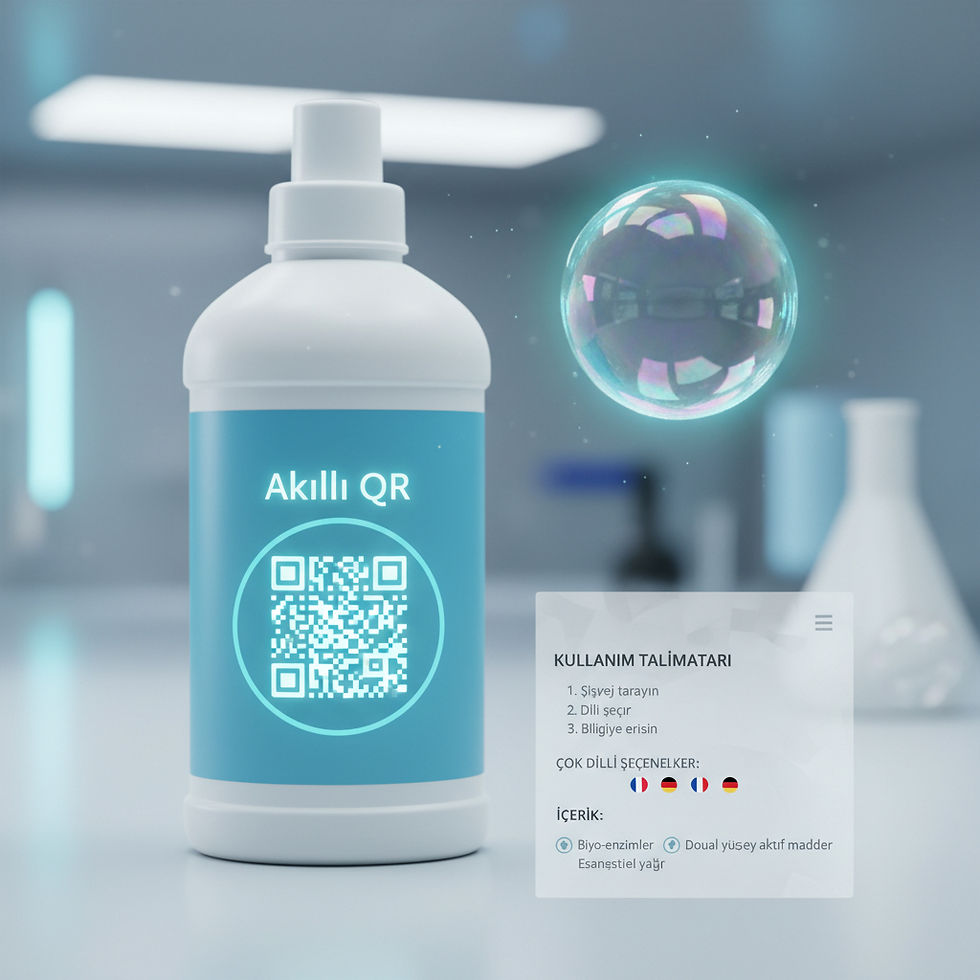
This is the physical link between the product and the digital record. Due to its low cost and smartphone compatibility, the QR code is the most common format in consumer applications. RFID and NFC are preferred for industrial and high-value products where durability or contactless scanning is important. The approach recommended under ESPR is the GS1 Digital Link standard, where a single scan can direct the user to different data endpoints according to their authorization.
Registry System
This is where the data is actually stored. Under ESPR, data must be hosted within the EU or in countries with adequate data protection standards, be accessible through standard APIs, and remain accessible throughout the product’s useful life plus ten additional years after the end of life.
When a consumer scans the QR code on a product, the scanner resolves the identifier in the registry and retrieves the data layer appropriate to the user type. A repairer scanning the same code sees disassembly instructions; a recycling facility sees material composition data together with sensitive sorting guidance; a market surveillance authority has access to the complete compliance record. The same physical code provides different data depending on who is viewing it.
Which Products Require It? — ESPR Timeline
The regulation covers almost all physical products sold in the EU market, except food, feed, and medical products. Implementation is phased by product category, with the most regulated sectors starting first.
For batteries, February 18, 2027 is currently the only clear legally fixed date. It applies directly across all 27 Member States — it does not need to be transposed into national legislation, and Member States have no discretion over its scope or timing.
The European Commission aims to cover the vast majority of product categories within scope by 2030. Companies in manufacturing sectors should follow the annually updated ESPR working plan rather than waiting for the final regulations.
DPP'yi Kim Oluşturmakla Yükümlü?
The primary legal obligation lies with the manufacturer. Under Article 9 of the ESPR, the manufacturer must create the Digital Product Passport before placing the product on the EU market. If the manufacturer is based outside the EU — as is the case for a large portion of electronics, textile, and battery production — the EU-based importer or authorized representative assumes legal responsibility.
Manufacturer Obligations
The manufacturer creates the DPP, assigns the unique identifier, attaches the data carrier to the product or its packaging, and ensures that the underlying record remains accessible for the required period. The manufacturer is also responsible for updating the DPP when product information changes — for example, in the event of a safety recall or regulatory change.
Distributor Obligations
Distributors must verify that the products they handle carry a valid Digital Product Passport. This is not merely an administrative obligation; distributors that knowingly place non-compliant products on the market may face the same enforcement risks as importers.
Obligations of Downstream Operators
Operators that significantly modify a product’s performance may have a responsibility to update the DPP. Repair and refurbishment operators gain the right to access relevant repair data, and in some categories may be required to record end-of-life updates. Online marketplaces, meanwhile, face due diligence obligations under the Digital Services Act that directly intersect with DPP requirements.
This multi-actor structure means that the Digital Product Passport must be understood not as a one-time compliance file, but as shared data infrastructure. Every actor in the value chain has a defined role.
Beyond Compliance — Commercial Benefits
Viewing the DPP solely as a legal burden is a strategic mistake. Companies that act early are finding real commercial value in the infrastructure they build, beyond simply avoiding penalties.
Supply Chain Transparency as a Commercial Asset
When you can demonstrate verified material sourcing and carbon footprint data, you can open the door to B2B contracts with large EU companies subject to obligations under the Corporate Sustainability Due Diligence Directive (CS3D). Procurement teams at major brands are already requesting DPP-compliant data from suppliers. Having the infrastructure in place before it becomes a tender requirement is a genuine differentiator.
More Efficient Repair and Warranty Economy
When repair technicians can access the correct product configuration and service history through the DPP, product returns and warranty management can improve measurably. Electronics companies running pilot programs have reported reductions in incorrectly diagnosed repairs — a direct operational saving added to the value of compliance.
Circular Economy Revenue Streams
Products with detailed disassembly and material data can command higher prices in the secondary market. Recyclers pay premiums for materials they can verify and sort efficiently. As extended producer responsibility schemes become more widespread, accurate end-of-life data can reduce EPR fees.
Defensible Marketing Claims
With the EU Green Claims Directive expected to enter into force in 2026, unsubstantiated environmental claims will face significant penalties. A DPP containing third-party-verified data provides an audit trail to support these claims, transforming marketing risk into a marketing asset.
How to Create Your First DPP — 5 Stages
1. Map Your Product Data
Identify what data you have, what is missing, and where the gaps are in your existing systems. Most manufacturers keep raw information across different systems such as PLM, ERP, and supplier portals, but have not brought it together in a single standardized format. This audit often takes longer than expected and reveals supplier data gaps that require months of improvement.
2. Choose Your Identification Scheme
Determine whether unit-, batch-, or model-level identification is required for your product category. If you want compatibility with retail scanning infrastructure and industry-wide shared registries, adopt the GS1 Digital Link standard. This decision is harder to reverse than it appears — subsequent systems and printed packaging will encode your choice.
3. Choose Your Registry and Hosting Approach
You can build your own registry system (expensive, requiring ongoing maintenance and strict availability guarantees), use an existing industry registry, or leverage a ready-made commercial DPP platform. Platforms handle hosting, API management, and data versioning on your behalf.
4. Define Your Access Permission Layers
Determine which data will be accessible to consumers, which to operators, and which to authorities. This requires legal review according to the relevant regulation for your product category. Incorrectly defining permissions — either by overly restricting consumer access or accidentally exposing commercially sensitive supplier data — creates both regulatory and commercial risks.
5. Integrate with Existing Systems
A DPP is only as good as the data that feeds it. Live or near-live connections to your ERP, PLM, and supplier management systems are required to keep the DPP accurate as products are modified, recalled, or reach end of life. Bulk uploads performed at product launch are not sufficient for categories where performance data changes throughout the product’s lifetime.
Frequently Asked Questions
Is the DPP mandatory for all EU products?
Not yet, and not all at once. DPP becomes mandatory by product category through delegated acts issued by the European Commission under the ESPR. The first clear legal date is February 18, 2027, for batteries above 2 kWh. Textiles and electronics are expected to follow in 2027 and 2028 respectively, with broad coverage expected by 2030.
What happens if a product is sold in the EU without a DPP?
National market surveillance authorities may remove non-compliant products from the market and order recalls and collection. Member States determine the financial penalties. For batteries, early indications in national drafts suggest penalties of 2–4% of annual EU turnover for serious or repeated violations. The regulation applies directly — there is no transition period for delays in national implementation.
Must the DPP be readable by consumers?
Yes, for consumer-facing products. The data carrier (typically a QR code) must be placed on the product or its packaging, and the consumer-facing data layer must be accessible without requiring an account or payment. However, not all DPP data is public. Repair manuals, hazardous substance details, and sourcing certificates may be restricted to professional operators and surveillance authorities.
Can the DPP be updated after the product is sold?
Yes, and for many categories it must be. The DPP must be updated when a product is recalled, a safety warning is issued, or its configuration changes after a repair. The registry system should maintain a version history that makes the state of the DPP at any point in time auditable. For batteries, state-of-health data is explicitly designed to be updated throughout the lifetime.
What is the difference between a DPP and a product data sheet?
A product data sheet is a marketing document controlled by the manufacturer, typically a PDF, without a standardized format or independent verification. A DPP is a machine-readable, access-controlled, standardized digital record linked to a specific product unit or batch through a unique identifier. It is governed by regulation, subject to third-party verification where required, and accessible through APIs. The DPP travels with the product; the data sheet remains with the brand.
Is a DPP the same as a QR code?
No. A QR code — or RFID, NFC, or GS1 Digital Link barcode — is the physical entry point to the DPP. Like a door handle; not the building itself. The DPP is the complete data system containing the unique identifier, structured data record, access permission framework, hosted record, and APIs that provide different data layers to different actors. A QR code linking to a static product page is not a DPP. A DPP without a physical data carrier cannot be accessed in the field.
Short Summary
A Digital Product Passport is a standardized digital record that travels with a product from the design stage through the end of its life. Starting with batteries and expanding to textiles, electronics, furniture, and construction products, it is becoming a fundamental part of the European market infrastructure. While compliance is mandatory, it also represents a significant commercial opportunity for early adopters in areas such as B2B contracts, the repair economy, secondary market value, and credible marketing claims.
Dpp
What Is a Digital Product Passport?
A Digital Product Passport is a standardized digital record that travels with a product from the design stage through the end of its life. Starting with batteries and expanding to textiles, electronics, furniture, and construction products, it is becoming a fundamental part of the European market infrastructure.
More Similar Posts

Dpp, Tekstil
EU Textile Digital Product Passport: A Roadmap for Turkish Exporters Before 2027
